Replication
Every closed set is written to the primary store and then to a second copy in a separate facility in another part of the country. Replication runs continuously in the background and does not wait for the intake desk to finish its day. Until a set has reached the second copy, the desk treats it as held in one place and does not mark its entry complete.
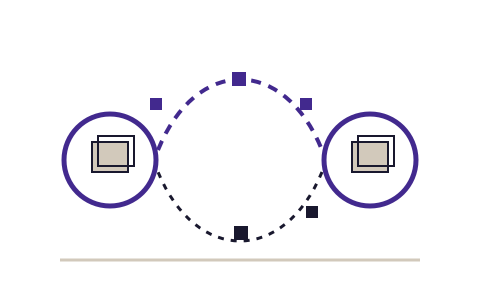
Small sets reach the second copy in the same working day. A set of a few gigabytes, such as a run of newsletter proofs, usually arrives there before the desk has written up its entry. Full-size sets are different. A full set of colour transparencies takes days to reach the second copy. The last run on LC-0479 took four days and six hours, because the line is shared with the nightly checksum pass and the set was the largest one in the queue that week.
The desk does not close an entry until the manifest has been read back from the second copy and matches the one written at intake. Once a month the second copy is checked against the manifests of every set, and the result is written into each entry's record. A mismatch stops the entry from being marked complete and puts the set on the desk's list for the next working day.
A shop does not manage replication, and no step in replication falls to a shop. A set is replicated when it is closed. The catalogue record shows the date the set was confirmed in each place, and that date is the only evidence the desk gives for it.